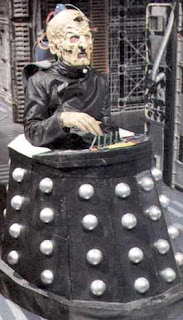
A typical roleplaying session
Frequently during any roleplaying rules book there will be an example of play. I've often found these quite unrealistic, so I've decided to create my own
GM:Right, so last session
P1:Hey, did anyone see lost last night?
P2:No I'm waiting for it to come out on DVD, so don't say anything
p3:Man, I hate that show
GM:..guys
P1:Well I won't spoil anything, but Hurley... lets just say Hurley is changed forever.
P2:Will you shut up!
P3:Urgh, what kind of name is Hurley anyway?
P1:And there was this really funny moment whe-
P2:STOP!
P1:Bu-
P2:NO!
P1:Fine, did anyone see Futurama?
P3:Oh yeah, that was hilarious
GM:GUYS!
....
GM:So, last session you met Baron Vondelsnit
P3:Who?
P1:The pirate
GM:No... Vondelsnit wasn't the pirate. That was Darkclaw
P2:Was he the one who stole that golden statue?
GM:No.. there wasn't a golden statue. You met Vondelsnit at the tavern
P1:Oh hey, thats where I got drunk and dueled that elf
P2:Yeah, that was awesome, then didn't we just leave?
GM:No... You met Vondelsnit, who informed you of the Prince's plan to start a war by having the princess kidnapped.
P3:I don't remember a prince or a princess?
GM:Well you haven't met them yet, but the Baron told you about them. Anyway, the Baron told you of the Prince's plot, and entrusted you with stopping the Prince's plans before they came to fruition.
P2:Oh thats right, and then we got the golden statue, right?
GM:there... was never a golden statue
P1:Oh hey, that reminds me of in Indiana Jones when he gets that statue by switching weights. I've always kind of thought that those traps wouldn't have worked because they had been there so long
P3:Well they're pretty mechanical
GM:I love those films. Best one gotta be Last Crusade.
P1:Are you nuts? Raiders is easily superior
P3:I always kinda liked Temple of Doom.
P1&GM:You are nuts....
GM:So uh, yeah, anyway, you were going to stop the prince, you went to talk to the duke, who turned out to be in on the plan and set his dogs on you, and we ended the session before the combat started. So if everyone can roll me initiative.
P3:Wait, we're in combat
GM:Yes, with the dogs.
P3:Do we not get a chance to react or anything
GM:YES, but you did that last session
P3:I'm pretty sure I wouldn't have let myself got put in this situation, I've got animal training 5.
GM:It doesn't matter, you don't have any time to train them
P3:Do I not get a roll?
GM...fine, roll at -100 penalty
P3:K... Yup, I succeed.
GM:What? I... fine, you talk down the dogs, the Duke looks pretty impressed
P3:Wait, theres a Duke here?
GM.ARGHHHHH!
Labels: random, roleplaying
Roleplaying:My campaigns
[Yes, more self indulgence. Thats really what blogs exist for...]
I blogged about my campaigns at the time, so I'm going to be a bit more focused here- a brief summary of what happened, what I was going for, and my favourite and least favourite moments.
My first ever campaign was in Dark Heresy, a system I'm not terribly fond of. It followed some acolytes eventual fight against a daemon that had plagued their inquisitor for quite some time. As it was my first campaign, I was eager to try new things, so there were several distinct mini-arcs which only tied in to the main plot tangentially. Most of the campaign was getting the inquisitor the kit he needed for a ritual (which, of course, went horribly wrong).
The good My favourite part was definitely the player's attempting to acquire an aspect warrior, imprisoned for illegal fighting in one of the richer estates. The method of acquiring said warrior was left open, and my players managed to rise to the challenge admirably. A particular moment I liked was when I threw in a random npc as decoration, then Nick chose to question him in a way I didn't expect, which worked really rather well.
The bad The opening adventure didn't quite work- I liked the idea of an assassin stalking the players, but had a hard time thinking of a way to kill the bastard. I needed a few more ways for them to defeat it than the vortex grenade. I really need to a sample adventure doing this sort of thing, to get an idea of how to work it properly. The final session was excessively long (also apparently under fluff there are only, like, 10 sisters of battle, but 40k fluff is so impossibly stupid i'm willing to ignore it), as often happens in my campaigns.
The next campaign was a mini-summer arc, which then turned into a published adventure. The summer arc was an idea I'd had in my head for a while, born of my collecting blood angels when younger. The idea of a blood angel who embraced the red thirst they were supposed to fight, but was not necessarily a minion of chaos, seemed fun to me, with a Chaplain attempting to hunt him down, and the inquisition getting in the way.
The good This campaign was in many ways the most open I've made. The players were plunked into a city with a specific objective and left to get on with it. They did have a contact in the administratum (ah, now that was a joy to run!), but were mostly on their own. The clues were there, and thanks to the Blood angel actually trying to attract attention, weren't too hard to track down.
The bad Once again, the final session. It was another "players need to kill hideous monster" thing, this time with an npc telling them a plan- I maybe should have given the players more agency here. They still had agency in how they chose to lead the blood angel to the factory, but maybe they could have come up with a better plan? As it was they managed a spectaculor failing of driving rolls, then a detonated frag grenade did them more damage than the space marine, at which point the psyker managed to keep the hulking monster busy by making him... trip over several times, at which point the npc pretty much had to save them (she was originally going to live). Maybe I should just stop being obsessed with the notion of a boss monster. Is it always necessary? I don't know.
(to be continued)
Labels: my life, roleplaying
Roleplaying- how much is too much
I am a sucker for punishment, and find myself drawn into the order of the stick forums. There an argument has continued about the Stormwind fallacy. Other than the tiresome nature of needing to give certain "fallacies" names, its a bit flawed. Its essential thesis is to argue that roleplaying and optimisation are seperate things, and thus do not effect each other.
This requires a careful definition of optimisation. An "optimal" character usually means one who is optimal given constraints. One classic example of D&D abuse is Pun-Pun, a kobold with the powers of every single god ever. No player would try to run Pun-Pun, for obvious reasons, but one could argue that in power terms, that character is optimal. Usually optimisers want to make their character as mechanically effective as possible without irritating their dm, and possibly sticking to a character concept.
So whats wrong with that? Well often it creates characters in the wrong order- the character is created to look at a particular mechanic, and then a back story is layered over the top of that. Ideally, if one was creating a sentient being, one would start with the character and make choices that make sense for the character. The point being not to make an ineffectual character- most people are good at what they do after all- but that most people do not always take the "optimal" choice. They are held down by society, their own personal distractions, and other things that stops them taking the perfect feat or spell at every level.
Of course, once you start playing it might not matter- a good enough roleplayer could probably justify a character who has taken those optimal choices, and might even make an interesting character out of it. I haven't actually seen that happen, but I'm sure it can.
The question remains, of course, does it matter? If I create a barely roleplayed character because I like to hit things, why should anyone else care? Well, obviously it depends on your group. A poorly roleplayed stereotype won't fit in terribly well with a more heavily roleplayed character, but the same happens if the situation gets reversed. As long as the players are happy with what they are playing, it doesn't really matter.
It does seem to me though to be slightly missing the point- the unique selling point to roleplaying games for me is the roleplaying: I can get joy in tactical builds in other games designed for that. One could argue that D&D is sort of set up for such tactical builds, and that is one reason why I am more inclined to play in games where optimisation is not really effective or even possible.
So yeah, do what makes you happy, of course- the game part is always more important than the roleplaying part, but it might be worth giving oneself over to a character once in a while (I do indeed give in to the allure of mechanical characters as well, in case you are wondering).
I'm aware that this essay may come off as slightly patronising- I don't intend to pretend to be the arbiter of all knowledge, even if I come off that way.
Labels: roleplaying
Roleplaying, characters I've played-part 2
The summer time brought two of my favourite characters so far.
for Nick's WFRP campaign we created character in their second careers. Both Ant and myself ended up with Vampire hunters, who had reached the career in different ways. I played a halfling with absurd ranged prowess, and Ant a human killing machine. We decided that we probably knew each other, and indeed Gollina, or girl as she was to become known, the baber surgeon would probably have helped us out in the past. Our names? Max and Felix.
It occured to me that the career of vampire hunter was a little strange, especially for two characters who had never been to Slyvania. After a bit of improvisation in one session between Ant and myself it soon became clear. Max and Felix were idiots. Exceedingly dangerous idiots who would kill anyone at the first sign of being a vampire, but idiots nontheless.
There was a reasonable indication that the campaign was meant to be dark. And dark it probably was for anyone who met Max and Felix, who brought destruction in their wake. Including:
-Killing an old man for the crime of shooting at us when we broke into his house. He was probably evil
-Killing a mayoral candidate with poison given by his clearly criminal opponent. He candidate was probably evil.
-Finally encountering a vampire.... and allying with it, declaring it a force of utter good. The vampire was definitely evil.
Max and Felix were astonishing fun to play as- absurd beings who were not actively malevolent only because they simply were not smart enough to be so.
The other character played over the summer was Isawa Chomei, who I had a lot of fun with. One of the cute things about L5R is that you can roleplay a character who has absolutely no desire to be doing their current task, but is compelled by society. In other campaigns this often doesn't make sense- why wouldn't they just leave? In Rokugan the social structure is such that if your superiors tell you to do something you pretty much have to do it.
This led to Chomei. A lecherous shugenja, he was a bit of a court mandarin, spending most of his time socialising, and making friends with women. Sadly, he was also married, and his wife got increasingly frustrated with him, causing several scandals at court. So Chomei was sent away from his beloved Phoenix lands, and forced to help an Emerald magistrate. This set up a lovely tension- my character was genuinely ready to run away during the final fight of the campaign, because he was tired of having to fight people all the time (being a Tensai he had appropriate spells despite not being a fan of fighting- he knew all the water spells he needed to), and also he had tried to sleep with the nemesis of the campaign... All in all, a fun character play.
I have two current characters. One is a zealot of Ulric. I have to say, its not a particular stretch for me to play boisterous over the top characters, although this is my second religious fanatic. Albert is a devout, loud man, prefering to go the straight forward way. Sadly he has been forced to take the path of deception recently, and feels a bit bad about it. Still, he is in Estalia now, and is a friar, his goal is clear. Defeat the forces of evil, certainly, but bring the cult of Ulric to Estalia as well! I'm liking Albert a lot: he's no idiot, even though he can act like one occasionally, and is a lot of fun to play.
Finally Jake is the first WOD:mortals character I've played. Its really fun to play a vanilla human- its possible to apply real life experience. Having initally thought of an idea of a lazy student who was funded by his parent, I discovered everyone else had gone the same route.... A little more thought gave me a boxer who wanted to be famous. After foolishly indulging in match fixing he has been asked to quit, and has gone back to the course he dropped out of at university, media studies. Seeing an opportunity to be on television, even if its only internet television, he jumped at the chance. He has since encountered disturbing things- not a man to think about the supernatural, Jake has never really defined his belief in the strange, but is forced to deal with it now. He's a man who will tend to stoop to violence without too much trouble, after all its what he's done for most of his life, but isn't necessarily bad natured. He has a foul tongue, but thats more due the company he used to keep. He's a bit lonely now- most of his friends were in boxing after all, and he finds the lazy students he's been saddled with mostly frustrating. Still he persists, hoping for a way out of his situation.
I hope this round up of characters was vaguely interesting- there was no point behind it, maybe to organise my own thoughts on playing characters. Roleplaying is something that comes mostly naturally to me,
Labels: my life, roleplaying
Roleplaying, the characters I've played-part 1
So, this will be a splendidly self indulgent post, as I review through characters I've played as, both in one shots and campaigns. We will ignore npcs for the purpose of this, as my npcs are rarely as fleshed out as a pc (most npcs have "plot" motivation, rather than character motivation).
I first roleplayed when I was around 12-16, playing every thursday afternoon after school for an hour, with a teacher as a DM. It was a fun experience, but I really didn't do a tremendous amount of roleplaying. Never getting beyond level 1, I tended to play wizards who really had very little do after casting their spell for the day. We seemed to face overwhelming encounters that butchered us all. I'm not sure anyone ever leveled.. all in all it was a little sad as an experience.
While at Bath I didn't roleplay at all. Bath doesn't have a games society. It does have a sci-fi club. To my mind the societies at Bath were a little less vibrant. There were some good political societies, and I do miss that scene a little. Oh well.
When coming to Southampton I looked ahead, and was pleased to see a gaming society. It seemed like an opportunity to meet likeminded people, and also to roleplay again. I am quite good at having infeasible amounts of knowledge about cultures I don't actually participate in, but its more fun to actually be participating in them.
My first ever character of note, then, was Borthas. A character for WFRP, he was an entertainer, barely an adult (aged 16!), he was swept up by events into a fight against a conspiracy to summon a powerful daemon of chaos. As he progressed, both he and I became more outspoken, as I became more comfortable with roleplaying and the character I was playing. I like to ground characters, at least first characters in a system, in stereotypes. So Borthas was a typical member of the Empire- racist, a devout follower of Sigmar and with strict notions of justice for mutants and criminals. I had no great notion of the character initially- his siblings had gone to fight in the Storm of chaos, leading him with an abiding hatred of the forces of chaos, and anything associated with them. Typically characters need to grow with the events that happen to them, and Borthas was exactly this. After a while playing him, it was fairly clear as to what he would do in any given situation. One of the most unfortunate aspects of his character was his prejudices were often proven correct- the wizard DID betray the party, and the halflings WERE serving bad food... As for the countess of Nuln... well...
Along the way were a couple of one shots. Its pretty hard to get past just a simple concept in one shots, and on reflection I do think its best to try and come to a one shot with a good idea of who your character is, as you don't have time to learn during the session, and shifts in your personality will be more noticable. So I played a reserved mage who had little to say (and tried to kill a lunatic paladin who was getting in his way), and an infuriated monkey samurai who had to deal with the most sociopathic bushi anyone has ever encountered ever. Both were little more than basic ideas. The Monkey worked fine for the session- there weren't many situations where his choices weren't obvious, but the mage could have used more thought.
Kakita Mito was next. A kikata duelist, he was, perhaps, the least equipped for the intrigues of Winter Court than any of the others there. This campaign ranks as one of my favourite that I've played in so far, being almost entirely based on intrigue and discussion. The ONLY fighting occured in the confines of duels (which I enjoyed, but wished there were a few more options to make them more tactical- Mike has made some changes to the dueling system to make it more system, however), which Mito was tasked to do. Mito's character was entirely changed by a roll for random generation. With the result of driven, I decided I needed to completely change many of the characters drives. Still brash and jealous, Mito's main goal now was to find some way to kill his ancestor who had dishonoured his family. Assuming that the reason I hadn't just gone myself yet was that my great uncle controlled a fortress in the shadow lands, I would need to gain enough political favour to gather an expedition. Having been outwitted in the courts of the crane (having focused most of his life on begn a duelist, Mito hadn't had much time for the intrigues of court), he had learnt more, enough that he might survive winter court.
Survive he did. Mito remained true to my initial vision of him throughout- the stuck up, honour ruled, driven bastard, who disapproved of others, and became jealous of those he felt bested him when they shouldn't (leading to an obsession with Go, then helping bring about the destruction of a poor Phoenix duelist...) He was a fairly simple character to play, happily alienating his allies as he acted the "perfect" samurai...
Steven was a promethean tammuz. Prometheans are kind of interesting to roleplay. They are effectively blank slates- they have in built skills (which may or may not have been inherited from their previous bodies, the rules are distressingly unclear on this), language and understanding, but little concepts of social norms, morality, the way to act in any situation. Steven was a tammuz, so intrinsically opposed to notions of servitude, something he was forced to struggle with throughout. He didn't get a good start- his first lesson was that of vengence, from his insane creator, and he was angry initially, determined to right what he perceived as wrong. As he grew and learned, he became calmer, and his initally demand for wrathful justice mutated into the desire to protect those who had become his friends- particularly Judy (Gemma's character, I think the name is correct?) whom he failed once before. Following this path went well for him, he felt that following the path of righteousness would lead him to humanity. There was a dangerous moment when he became connected to power- the staff of the first golem threatened to corrupt him, but he managed to resist, and used it to defeat Osiris in the end, and got his progeny (something he had initially resisted, but gave into when he realised it was the only way) to return the staff.
Promethean is at the same time an excellent system to roleplay in, and at the same time frustrating- its really not clear how much of who the character is should be decided by experience, by the type of promethean they are, and who they were. I guess its left up to the player, but it'd be nice to have a little more guidance on that.
Right, this post is long enough for now, and takes me up to the summer of 2009. Concluded in next post.
Labels: my life, roleplaying
Roleplaying and the nature of evil
[I've got in mind a handful of roleplaying posts to make, this is the first one.]
One of the greatest mistakes ever made in D&D was the alignment system. Defining a character as good, neutral, or evil, is just an astonishingly stupid thing to do (lawful and chaotic slightly less so, but still). Why?
-It strait jacket characters into acting in a certain way, simply because of an alignment choice
-It encourages meta thinking rather than character thinking. Your character performs an action not because they are invested in it, but because they are "good"
-The nature of evil is nebulous, and encouraging players to take it as alignment produces a host of raving lunatics.
What is evil? I originally wrote this with a rather emotive example, but have decided to withdraw that. Hitler is the obvious example for evil. Yet he, as far as we know, did not believe his actions to be evil (he had some screwed up notion of manifest destiny and seemed to believe that he had only been wrong in thinking that germans were ubermen). He had rages, certainly, but could be kind, apparently had a form of love, and was certainly charasmatic enough to charm those around them.
Simply put, human beings are complicated. You can be hideously horrible to some people, and delightfully pleasent to others. Even sociopaths can be charming, although they live effectively amoral lives, and will kill without compuction, many of them are smart enough to realise that while they find no value in morality, others do, and its worth pretending that they do (this is similar to the realisation Belkar came to in Order of the Stick recently).
A completely untrustworthy lunatic who acts "evilly" at every opportunity will soon be unplayable. Not only does a character make little sense, they simply do not play well with others.
If you want to play an evil character, you need to think what has driven such a person to the extremes they go to. Look at, for example, the Operative in Serenity. There is a man capable of acts of utter evil, who has been completely indoctrinated to believe in the world he is building by his acts. We know that he will go to any length to defeat his enemies, often depraved ones, but can also be entirely charming whenever he needs to be. So you need to decide what drives your character. What is their motivation, their goal in life? What lines will they cross, and why? Who do they trust, and who do they hate?
Playing an "evil" character should not be a target. Ideally one should come up with a character concept of someone who happens to be "evil". Someone who, for whatever reason, has made choices almost all of us would disagree with, and is willing to keep on making those choices.
More than ever, as an evil character you really need to think "whats my motivation", something that should be on every roleplayers mind when their character needs to make a choice of any kind. When an evil character is about to do something wrong, you do need to question why- it can't be just because they are evil, it has to be something that drives the character to perform that particular act.
Labels: roleplaying
WFRP:Shallya's Light, a big long essay, discussing combat and adventures
I have finished running my very first WFRP campaign. So, thoughts and feelings?
This campaign lasted a long time in genesis. I was actually going to run it the previous academic year, but ran out of time and decided to delay. It went through a lot of iterations, initially starting as a mystery with the high priest of Shallya being the villain, and trying to delay the players as long as possible by sending them on pointless quests, and against her enemies. Sadly the betrayal by leader theme was a bit of a common one for wfrp, and I decided that as a twist it wouldn't be terribly good.
I needed a way to link my adventurers to several ideas I had- intrigue in the noble quarters, dealing with criminals, a rogue group of Shallyans. Initially the quest could have been more open, and possibly should have been, but I was attached to some of the ideas and needed something to tie them together.
A macguffin was an obvious choice. To my mind adventures can be crafted in several ways-
A mystery that requires revelation. This will involve the players interrogating the enemy, trying to get to the heart of some plot. Its often a bit more open for the players, and can be awesome. It requires a lot of effort for the gm, however- the mystery cannot be too obvious or the players will feel no succour at having solved it, but if its too hard the players will stall, which is absolutely no fun.
A quest for a macguffin. This is actually fairly broad. The macguffin doesn't have to be one thing, and is great at driving plot. The quest for it can actually be as open or as railroaded as one would like.
So the book, leading to the grail, was crafted. By having several factions interested in it- the rogue Shallyans for obvious reasons, the criminals for financial, and Tzeentch mainly to lure the players to it, this neatly pulled all the threads together, and encouraged the players to follow through. The natural lead meant I didn't have to railroad too much. The mercenaries following the players was the most major part of railroading, and I could arguably have just had the book taken from the players, but its a classic trope to have the heroes get the macguffin only to lose it minutes later (I suspect this campaign was unconciously and sometimes very consiously inspired by Indiana Jones).
There were some issues I had with my design here. I rushed too many sessions. I had a point I wanted to get the players to get to, and made things too easy for them to get there- this was notable in the noble's quarters, which really could have lasted a little longer. The final combat with the Tzeentch could have been a bit better also, with a couple more cultists to help the leader. If I'd been more relaxed about where the players needed to get to I think it would have made for better sessions. Combat is something I had a big issue with. It needs to be set up carefully to be interesting. The best examples were the attack on a gang, where there were multiple antagonists at different points, and different approaches for the players, and the final combat. Many of the other combats just didn't work, however. WFRP is not a terribly exciting combat system, and making them interesting is hard work.
The combats that didn't work where generally against one type of enemy with an objective to engage in close combat with the players. This is a fairly dull objective, and denies player choice- no matter what the players do they're probably going to be all in combat within a few rounds, and be stuck in the cycle of aim and attack that combat ends up as.
To improve combats, one either needs- multiple enemies with different types of attacks, at the most simple this can just be ranged and melee. The terrain should be interesting enough to present tactical choices to the players- cover for them or the enemy to use, items that might be used to disrupt the enemy, high and low ground. I think if the enemy is just going to be melee, ideally they might have interesting objectives. The fight against the beastmen would have been a lot more interesting if their principle goal had been to kill the weakened shallyan, which would have made a reasonable amount of sense anyway (the nurgle cultists had persuaded beastmen to attack). This would have forced both the enemies and players to fight differently, and added tension- while the players were never going to lose the fight, they might have lost the sister, making some portions of the rest of the campaign harder.
I need to think more about combat in rpgs- often they're an after thought, but in systems that don't give many combat options one really needs to work hard to make sure that combat remains exciting.
The final session went pretty well. The players were given lots of choice as to what do in the city. I possibly shouldn't have given them the hint about Beatrix, but the way the conversation was going I was worried they wouldn't think to enlist other npcs help. The remaining possible support was the palace, which was about to be assaulted by a great unclean one, and Morris, who would have been an interesting source of help. I shouldn't have attacked the players with the nurglings, as it was an utterly pointless distraction, but I felt i needed to demonstrate the desperate state of the city.
The players found their way in to the temple well, but did alert the people in the main altar room, allowing them to wait in ambush. If they'd manage to take down the cultist silently the enemy would have been caught by surprise.
The final fight was reasonably balanced. Martha was a monster, with 3 magic, two attacks a toughness of 6 and 16 wounds, but the other combatants were not as powerful. The plague bearers, despite effectively ambushing the party, lasted too long. This was partially my fault for underplaying Maria- she had more tactical options than she used. I really don't like having npcs along with the party because I forget about them and don't use them properly, but the party persuaded her to come along with reasonable logic. This was another reason to try and off her before they got to the room! Still, while it did go on too long, I think the actual combat was reasonably interesting, even if my players did manage to prove astonishingly inept throughout.
All in all my take away lessons from this campaign is to not neglect prep time for any aspect of a session, and to make sure not to rush a session unecessarily. It can almost always be split in two.
Labels: roleplaying, wfrp
Roleplaying theory
This is an interesting read, and has given me some ideas. I've never run a sand box game, but have recently been growing a desire to do so. This article reads true for me, and I may well end up applying it.
Labels: link, roleplaying
Cheating as the gm
Depending on how you look at it, the gm cannot really cheat in a roleplaying game. Its their world, after all. However, its clear there are lines gms should not cross. Generally speaking it shouldn't be the gm's role to tell players how they act, unless said players are clearly using knowledge their character simply would have. Also, while some dice fudging might be allowed, the rules he's using should be the same as applied to the players. Or, if not, the rules are consistent (asymmetric rules between players and gms are not unheard of, but these do need to be clearly defined.)
What kind of dice fudging should be permitted? Ideally it should be avoided as much as possible, but I think sometimes should be allowed. While preventing your players from ever dying is not fun, its quite easy to accidentally throw an overwhelming encounter at your players by accident. In those circumstances it might be worth ignoring a couple of things. I've done this once or twice, but it is best to avoid, becuase players can't have accomplishments if you're holding their hands. Its also best to avoid fudging for anything other than the players favour, no matter what happens. If, for example, your swarm of unstoppable nurglings get taken down in two rounds of combat, then you just have to live with that, however implausible (between them the npcs rolled 4 ulrics furies....).
Labels: roleplaying
Cheating
Another order of the stick forums related rant, its draw is inoxerable.
Cheating in competitive games is quite clearly wrong. You are basically playing a game according to a different rule set to everyone else. You are far more likely to win, and while this might be fun for you, you are setting out to take away the fun from everyone else. Strangely though, people will even cheat in roleplaying games.
Roleplaying games are largely co-operative games, yet it is fairly easy to cheat. I've seen some arguments around that this even might be ok. After all, no-one is competing. True, but when someone always suceeds, it becomes frustrating. A co-operative game isn't very good if one person is always doing better. I enjoy my characters having amusing epic failures, but this is less entertaining if another player is just doing all the work. I can live with random chance, and indeed want to it enliven the game I' playing- if I wanted to play without dice I'd do so. Without the possibility of failure, success becomes kind of pointless.
Labels: rant, roleplaying
A bit of background(WFRP)
Mortis Venteri had always resented his father. The stinking alchohic had ruined his family's fortunes, and would continue to do so if nothing was done. Most would resort to simple murder, and perhaps thats what Mortis would have done if he had not found a book in the Sentis family library. Hidden from obvious sight, it detailed the.. darker histories of the family. Speaking of a snake demon that had brought the family to power.
Mortis became obsessed with this creature, and found out everything he could. In a stroke of fortune (and a considerable expenditure of the family's remaning wealth), he was able to piece together the daemon's true name. With that in his posession, he was able to bind the serpent into the plane, and make it do his will. The daemon was mostly powerless, and, of course, hated it. It got worse when the plague came, and Mortis used a nasty piece of magic to fight off the plague. Doing so robbed the daemon of most of its power, as it was forced to spend it protecting the hapless nobles of the Grafsmund.
It bided its time, knowing Mortis would eventually slip. Sure enough, no mortal was perfect, and the daemon's name was long, and hard to pronounce, so that mistakes slipped in. Not enough for the daemon to out right disobey Mortis, but enough to scheme. It had gathered much information, and saw a way to twist the fates enough such that it could be freed from the mortal plane. All it needed was some stooges...
Labels: roleplaying, wfrp
Railroading in rpgs
So my players recently acquired the macguffin they needed, only to have it snatched from their hands. Stepping outside they were confronted with a force they could not defeat, and were tied up and their object stolen. Now the question is, was this railroading?
I suspect some of my players might argue that it was, but I disagree. First of all, there were very good reasons for the people to be there (that my players are currently unaware of)- they didn't magically appear, although it did seem like they did. Second of all, the players weren't actually forced to do something. There were several ways they could react. I admit, I wanted them to react by giving up the macguffin, as it leads to a fun little arc that'll tie us up for christmas, but if they hadn't, they might have escaped. They didn't try in the end, and it would have taken some ingenuity, but I probably would have allowed it. (if they had done so I probably would end the session to plot out how that might go instead, as we were near the end anywhere). They also had the option of charging into a fight. I had made it very clear that the odds were unbeatable, but one of the advantages of WFRP is that if the players do do something quite so stupid, you can just deduct a fate point each and keep on playing, while in other systems the mechanic isn't quite there.
Labels: roleplaying, wfrp
A short note
This one goes out to certain D&D optmisers out there.
-No its not roleplaying
-No theres not a great deal of difference betwen you and munchkins
-So help me, if you call it "kung fu" again, I will end you.
... I may have spent too much time on the order of the stick forums of late.
Labels: rant, roleplaying
World building
I've never been interested in world building in RPGs. I'm not that interested in creating a framework or society, I'm interested in creating stories within someone else's framework. This is probably why D&D has never appealed to me. While it has a ready made world, its very much "generic fantasy land", with fluff tacked on from here and there. I could move the system elsewhere, but 3E is inherently unbalanced, with ridiculous magic, that would only create certain types of societies. I can't tell stories that I want in D&D.
The reason I like WFRP and L5R so much is that I enjoy the worlds they inhabit, and am happy to play in their worlds. The systems are designed for these worlds, and work well in them, and are not easily exportable, other than to worlds that function by the same kind of rules: escaping low fantasy would be difficult using WFRP, and the structured societies produced in L5R are somewhat inevitable in a world where death comes very, very quickly.
This is my main problem with Dark Heresy. While it lives in a universe I enjoy greatly, the system, exported from WFRP with extra bits tacked on, grates against the world. Dark Heresy is a universe full of hideous gribbly threats, and you are employed by the inquisition. So you should be able to destroy some random gang punk without too much difficulty. You certainly shouldn't fail your goddamn perception tests every 5 seconds. I might be able to make some fixes to it, but I do wonder if a whole new system needs to be connected to DH to make it more fun.
Labels: roleplaying
Random anecdote
In the pub in southampton, in my mini-stag, we discussed magic items from D&D, and the potential to have them in real life. We briefly discussed which item of great power one would like from the world of D and D, someone suggested a vorpal sword. Of course, as I pointed out, the utility of a vorpal sword (a sword with a tendency to slice people's heads off) is less useful in a world where ALL swords can do that.... A lot of magical items in D and D really wouldn't be more useful than their more mundane versions... (+1 longsword for the win!)
Labels: random, roleplaying
Why I hate D and D alignment
Note- this post will be of interest of those who A-know what D and D alignment is and B-care about order of the stick. I give no promises for anyone else.
In the most recent order of the stick,
Haley kills crystal. I found this act deeply disturbing. Haley, while often a little obsessed with making herself money, has had a tendency to do the right thing. This, however, was a rather cold and calculated act, taken when there was no pressing reason to do so- she is at peace with the thieves guild, and has decided to create a dilemma herself. For me, this felt, if not out of character for Haley, at least disturbing. Some people on the order of the stick forums disagreed, and thought it was just awesome. Some disagreed, giving fairly decent reasons as to why the act might have been justified. An annoying amount got very irate at the very notice of a criticism.
Now there were two main arguments that really irritated me, the first being that the comic is set in a different world, so the same laws of morality don't apply. This is in some ways accurate- if someone dies in this world, they can be brought back (although it is an expensive and not guaranteed process). Yet the characters mostly have fairly human attitudes, and indeed the comic itself does. Actions that we think of as evil or morally grey in real life are generally morally grey here. I think this argument bothers me most in the way it is presented- it is meant to shut the other person up, close off discussion, because my morality doesn't apply here. I would prefer to have a discussion about what is right and wrong here, and why the scene made me uncomfortable, but that is often hard to do.
The second argument, and this always bugs me, is alignment. Alignment is a pretty stupid concept in dungeons and dragon. The axis goes from good to evil, from law to chaos. This is meant to describe a characters moral compass, but it is woefully inadequate at doing so. The concept of evil is nebulous at best, and the idea of someone being pure evil is generally speaking, rather stupid. It's fine in a comic book world, which d and d sometimes is, where the lich is irredeemably evil, but it becomes far more complicated when you have a character who is driven to hurt others because of the oppression of his race.
The main issue with alignment is it seems like it gives people an excuse not to think about who their character is. What drives them to do what they do, what decisions they would make. Haley's killing of Crystal is driven by a multitude of motives. Revenge, a cool assessment of threat, perhaps a move to rid the world of evil. All possible motives. I'm very much NOT interested in whether doing this makes Haley evil or not, I'm interested if this makes her different to the character I thought she was, whether her actions were justly inspired, whether she is changing into something different. I guess I do sort of care as to whether the murder is an evil act, but to get bogged down in technicalities bothers me.
Alignment in roleplaying has always seemed stupid to me. Telling a character that they risk changing alignment is usually pointless, as it doesn't have that many in game effects, and also should not be necessary. A good roleplayer should be taking a character in a particular direction based on who that character is, and how they've been changed by the events they've encountered. Alignment might serve as a starting point, but it should never be a strait jacket to who someone is.
Labels: rant, roleplaying
Dark Heresy: Sessions 4-5
The players awoke to the delightful sound of gun fire. The Strophe's house was under attack. Rapidly getting out of their rooms, a rather brutal combat emerged, where Trantor was thrown bodily backwards by one of the assailants. Getting their act together, the players managed to defeat enough mercenaries to drive them from the building. Questioning revealed that the mercenaries were employed by the same organisation, pressure point, as before.
Deciding time was of the essence, the acolytes headed for Ambulon after a days rest. They were rather impressed with the extremely weird turtle like city, especially Mordecai, who practically wanted to have sex with it.
Landing, the party met their contact on the city, and then went to meet the mysterious oracle.
The oracle gave the party some information, giving them an understanding of the force manipulating the joyous choir, a fairly evil bunch of mercenaries by the name of the Serrated Querry. With this in mind, the party went to their quarters to leave some possessions, and then most headed to the joyous choir temple.
Upon approach, the acolytes noticed Theodosia wondering around, giving orders. Getting closer revealed that he had not heard back from the mercenary team yet, which gave them a chance to snoop around. And snoop they did.
Splitting up in the temple, Trantor and Enoch went down a short corridor (through a door marked "no entry"). They were confronted by a Joyous Choir official, who, after some attempts of obfuscation on the players part, demanded identification. So they chopped his head off. This left them.. somewhat covered in blood, so they dragged the corpse into a room and hid in there to clean up.
At this point, Ravion came to the corridor to see it filled with blood and the acolyes missing. Seeing the trail leading to the door, he burst in with gun ready... and Enoch made him spasm, making a laser shot fire into the air.
Pulling the door shut, the acolytes drew their guns and prepared for discovery.... Ravion, however, had an idea, and burst into the corridor, claiming that he was searching for the killers. Sadly the two autogun wielding security men were not exactly holding to that viewpoint, and ordered him to get down on the ground.
At which point, Trantor tackled him, and pointed a gun to his head. Convinced by this performance, the two men wondered over to get posession of the supposed heretic.
At which point Trantor knocked them aside, Enoch jammed their weapons, and fighting began in earnest.
A brutal and dangerous fight happened in the narrow corridor, but at the end the acolytes emerged victorious. Calling to Mordecai, they heard he was only a few minutes away, so they decided to lay an ambush for the guards still in the main church.
Sadly, this didn't go brilliantly for them, as Ravion acted with... less subtletly than he should have, and the guards opened fire, taking down Enoch.
Mordecai arrived soon after, bringing the magistratum with him, and his added assistance dealt with the guards.
With the magistratum there to secure the temple, the acolytes headed down. Finding a locked door, Mordecia attempted to open it with some subtlety, but sadly wasn't able to cut the lock away very easily. Ravion attempted to kick the door in... and failed miserably. Finally, with a rather exasperated expression, Trantor took Enoch's shotgun and blew the door open. A grenade was hurled into the room, and then the party dived through. Sadly their bumbling had attracted attention, and they were met with a hail of fire which sent Ravion collapsing to the ground.
Revealed was a room clearly used for surgery, but with one... modiofication. It was much huger than it should have been, with weird writing scribed on the ceiling. It also contained Theodosia.
The final combat resolved with Theodosia unconcious, Ravion nearly dead, and a set of melta bombs ready to blow the building sky high.
Running away, they were able to secure the heretic, and question him on the Serrated Querry. Information gained was mostly a confirmation of what they had learned so far, and while they had clearly ended this particular scheme, it was implied that the Serrated Querry was still very much active.
Reflections:It's always fun to hurt your players! I'll move to the final fight in a minute, and talk about the Oracle, which is a character that annoys me. The Oracle has information on the Serrated Querry, and seems to believe they are linked to the Choir. Why hasn't it told anyone? In a WFRP setting, such a character is more believable because of the lack of over imposing central government, but in 40k, such a withholding of important information stinks of heresy- while the Adeptus Mechanicus are not a faction to anger, it strikes me as a little weird.
The final fight was awesome fun. The book provides you with little detail, and just left me to work out what was happening. I wanted the players to have a chance to explore the temple, then come back with reinforcements, so they could fight Theodosia alone, and fully equipped. Things... did not work out exactly as planned. In particular, the kill happy nature of my players was a little.. ridiculous, but never mind, it turned into a rather entertaining motif. While there was nothing about the destruction of the temple, it made sense to me that Theodosia would attempt that if caught, and added some enjoyable urgency to the closing scenes. Full auto fire is proving exceptionally effective.. I have a feeling the players will be using it a lot, especially with the wonder of man-stopper bullets!
There was a moment where I thought the party were going to get killed off, but the extra contingincies I had planned (reinforcements, servitor control), worked in the end. I think we managed the right level of lethality for the final encounter of an arc.
Labels: dark heresy, roleplaying
Dark Heresy:Running a premade campaign-Also, review of the back of the book adventure
So, my third Dark Heresy campaign, and this time a premade one. This makes things easier, but in some ways harder, because sometimes the book will make assumptions on my knowledge that I don't really have. I am also criminally lazy in weird ways for session preparation. For example, I will spend ages thinking about a session, but not write out the stats of certain characters for combat.
The odd thing about premade campaigns is sometimes they really irritate me. They take characters to stupid places, and fail to anticipate what players are thinking. The adventure at the back of DH has the air of an investigation, but really doesn't let its players do any...
(Note spoilers from here on)
The most the players will discern is that their superior is clearly a bit unhinged, although I even deliberately played it up. There are some creepy hints along the way of what is going on, but they are horror movie style hints, and do not really help the players unlock the mystery. In fact I don't believe there is any sensible way for the players to work out what exactly happened even AFTER the end.
I would probably be fine with this if the game went into horror in a big way, but while it flirts with it, it doesn't really make it work, as the conclusion is a fire fight. Mike at one point tried to retreat, and the notion of the daemonhost chasing the players through stern hope is a MUCH cooler idea, and I wish it had occured to me to go with it. It might have resulted in some player death, but after all, that is what fate points are for. Indeed, reworking the adventure so the players, could, for example, lure the daemon into the genatoria and blow it up would make it more awesome, with a cat and mouse game happening until the players finally turned the tables.
Instead the game relies on the players getting a plot vital piece of information- a book which basically outlies what the players need to do (or rather doesn't, more on that later), robbing the players of much of a chance of a discovery. Also, while in a meta-game fashion it's pretty bloody obvious that the players should take to mystic witch lady and ignore their orders, from a roleplaying perspective it actually makes MUCH more sense for them to arrest her! While the inquisition does pride themselves on a certain amount of free thinking, these players have had about two sessions under the inquisition, and the rest of their lives obeying orders... It's annoying to me that the game is encouraging players to meta-think and then try and roleplay their characters into accepting that- thats not how the game should think.
Of course, as mentioned, the plot book isn't that useful. The book, while giving some background, doesn't tell the players how to hurt the daemon, indeed the line of dialogue giving them a hint is only optional. This hint is also nicely obscure, and while I tried to drop some hints, only a couple of sessions happening meant that the players did not really get it. There is another route to saving the day, talking to crazed superior in a ball of chaos and trying to persuade him. Yeah, it sound stupid to me too....
Finally, when you get the fricking hint it's too damn easy to hurt the daemon. I am typically brilliant at creating deadly threats that utterly fail to hurt the players (these now include a space marine and an eversor assasin), thanks to my inability to roll, but it is fairly easy to kill it off.
There were some things I liked- the notions for the mass combat was enjoyable enough, with some varied suggestions which were reasonably balanced so not to kill off the players. The plot itself was actually ok, although the resolution was bad.
I would definitely be interested in running this adventure as a one shot, skipping out a few encounters to focus on creepy horror, so the conclusion could be nice and scary (and also encourage players to run, which I admit is not easy!)
Despite the negativity I am looking forward to the next arc, which is better written, although we shall see how well the players keep on the carefully built rails! I actually like all three adventures in the book, and hope I do get the opportunity to run them all... we shall see how the time goes.
Labels: dark heresy, roleplaying
Dark Heresy, Lifeblood Preserves-Session 2
StoryThe party were woken up early to be met with Terronius, who informed them that not only had another murder occurred, but the police were claiming they had caught the perpetrator of the crimes.
Setting off to investigate the culprit, the party decided they did not want to reveal that they came from the inquisition. Instead the psyker played with the mind of the guard at the desk, and they pushed past, into the corridors. However, upon reaching the cells they discovered another guard, who pushed the alarm before the party could stop him. At this point Trantor decided that it was time to declare some authority.
The guards were almost instantly cowed by the legendary authority of the Inquisition, and became extremely helpful. The party were led through to the culprit.
Raelis was slumped in the corner, his body showing clear signs of a recent beating. Rousing him he revealed fangs sharpened to a fine point. Raelis was clearly far gone into heresy, and while he stuck to his initial story to begin with, a dose of psykic power quickly dissuaded him from continuing. He told them that on the appropriate night someone would mark the pub that the cult were to get their newest victim from. They would drug said victim, then lead him back to be fed on, and dump him in the chosen location. Raelis had never been back to the base, so had no idea where it was, but told them that the attack would be occurring that night. Dmitri, believing that Raelis had told them all the party needed to know, executed him.
The party then headed off, to look at the body and the place where it was left, which confirmed what they had seen already. They then went about finding the next location. This didn't take too long, St Drusus' Hammer was marked. The party then decided to split up, with most waiting in the pub, and the other two going across the street to watch from above in a sniper post. Quintus, the assassin and Mordecai the tech priest were chosen for this. Qunitus managed to convince the owner of the shop across the street (Carmail's gun shop), to allow them to rent a room, managing to imply along the way that he was intending to have a rather intimate encounter there... which made Carmail somewhat surprised when he saw the other gentleman was a tech priest....
The party set up for the evening. Eventually the cultists turned up, and sizing Trantor up as a target, made their move. After a while, believing Trantor had been thoroughly drugged, the cultists led him out of the pub. Enoch and Dmitri followed, and after a short while Trantor made his move. Both Enoch and Qunitus opened fire, and the cultists went down very quickly, with two managing to be took alive. Deciding to take them to the alms house, the party headed off.
However, before they could reach it, they were confronted with the extremely intimidating sight of a space marine chaplin, a man in black power armour with a skull painted on the helmet, a power field covering him. He demanded the players put down their weapons and hand over the prisoner. At this point a women dressed in black stepped out of the shadows.
"Thank you Mariella, you have been most helpful."
"My pleasure Tomias"
The players handed Tomias their id, but while he accepted that they were from the inquisition, he claimed that "this was a matter purely for the blood angel's chapter to deal with,". However, Tomias said that they could meet with him tomorrow at his room in the Venerate.
Needing only one cultist, Tomias executed the other, and left with the mysterious Mariella, commenting that they could interrogate the prisoner on her ship.
ReflectionsIt's an interesting experience, giving players more choice, as they can do things you don't expect. For example, the players suggested that they might move the red handkerchief from the Hammer, which would have been an interesting development. I suspect in that instance I might have used Mariella to stop them doing so, as she had been tailing them for the entire day. Indeed, Mariella, who originally was going to play a less active role in the adventure, proved to be very worth involving, as she enabled me to adapt to the players attacking the cultists outside the pub, rather than following them to their destination, as I had expected.
I really enjoyed this session, it was good to see the players basically getting to choose what they do, and how they planned to deal with any particular situation. I managed to adapt to it reasonably well, even when Dmitri randomly killed the prisoner, for which he got a corruption point.
Labels: dark heresy, roleplaying
Dark Heresy Write Up
So, I'm finally back online, and finally writing up this campaign. This is going to be the story, as in the plot as seen by me when designing it, and a brief round up of my thoughts.
StoryCenturies before the Imperium returned to the Calixis sector, a selection of humans decided they wished to live in a paradise of nature. Determined to experience the beauty of nature, but in an utterly controlled environment, a consortium of humans using technology undreamed of in the current imperium constructed a massive hive on the mostly desert planet of Baraspine- a world previously unused. It was designed so that plant life and foliage would grow within the hive itself- an utterly controlled natural paradise, utterly self sufficient. While there was a space port installed, it was not intended to see much use.
This dream was doomed to fail. The first generation were happy to live in their paradise, but many of the next wished for change, for something different than a life of working the earth they lived in. Their minds were ripe for a daemon full of ambition. Skraelig, a daemon of Tzeentch, worked on the minds of the younger generation, convincing them that it could bring change, the social upheaval they desired. All they needed to do was help it in turn....
Skraelig believed it could become nearly fully manifest in the world with enough sacrifice, and be powerful enough to dominate the planet and then the sector. However, some of it's cultists became wary of it's interests, and forged a plan to defeat it. When Skraelig became manifest, it discovered it had been summoned a kilometre under the earth. It's death scream obliterated all life on the planet.
Later, the imperium came to Baraspine. Lord Cafren's ancestor found an empty world which he claimed in the imperium's name.
With the return of life to Baraspine, also came the Imperium's greed, and they began to mine out the rich minerals from the planet, as well as convert a large proportion of the natural wonderland into industrial hives. With mining, they began to encover black stone which throbbed of the warp. For the first time in centuries, Skraelig began to be aware. It saw even more people it could corrupt, if it could only become flesh. A young Marr visited the planet, and it was then that Skraelig discovered someone amiable to his plans.
Marr became convinced that he would be able to summon a daemonhost, a truly unholy creation, a daemon bound to a human body. The ritual went wrong, as it was fated to do, and the daemonhost escaped. Skraelig was free to begin it's corruption of Baraspine.
With the stone already embedded in the earth, it just needed it to be mined out and collected together. Finally, Skraelig needed to be released from it's form, and Marr would be more than willing to do that....
Marr was willing, indeed it became an utter obsession for him. Sadly for Skraelig, he took it so far that he researched ways he might utterly abolish the daemon's presence- a holy relic might just do it. So as well as the ingredients for the ritual, he looked out and found a holy relic- a bone of St Drusus. Skraelig was not prepared for this; indeed, did not believe that such a thing could hurt it. This was to prove to be Skraelig's undoing.
ReflectionsI enjoyed running this campaign. In many ways I was possibly a little too generous with my players, giving them more money and experience than they maybe should have, but this allowed me to have fun with the new system, and throw new and interesting threats at them. The very led structure with each section taking about a session meant I was able to experiment with lot's of different adventure types along the way. For my next mini-campaign I'm going for a much looser structure, but I did enjoy this as it allowed my imagination to create fun little challenges along the way.
Labels: dark heresy, roleplaying